
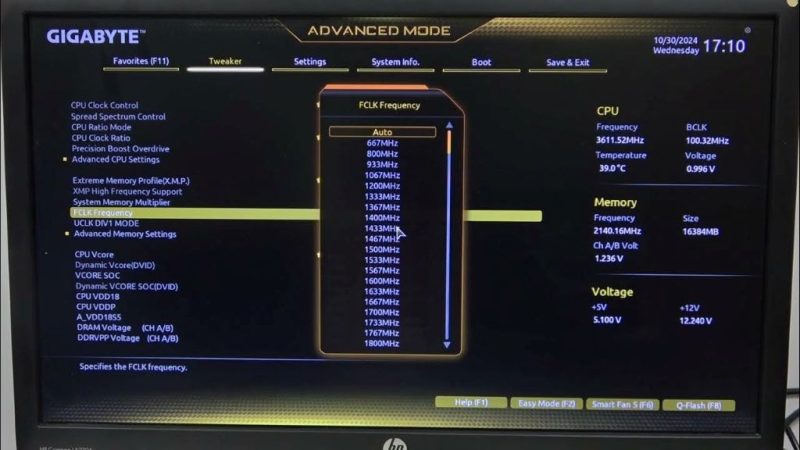
Modern AMD processors rely heavily on proper memory and fabric clock configurations to deliver peak performance. Understanding these settings becomes crucial when building high-performance systems. The Engineers Network community has extensively documented these optimization techniques, helping enthusiasts unlock their hardware’s full potential.
AMD’s Infinity Fabric architecture connects various components within modern Ryzen processors. This interconnect system operates at specific frequencies that directly impact overall system performance. Getting these settings right in your Gigabyte motherboard’s BIOS can mean the difference between mediocre and exceptional performance.
The what is fclk frequency in bios becomes a critical factor when tuning your system. This setting controls how fast the Infinity Fabric operates, affecting data transfer between CPU cores, memory controllers, and other integrated components. Proper configuration ensures optimal communication throughout your processor.
Understanding FCLK in AMD Systems
FCLK stands for Fabric Clock, representing the operational frequency of AMD’s Infinity Fabric. This internal bus connects different parts of your processor, including CPU cores, integrated graphics, memory controllers, and input/output hubs. Think of it as the highway system that allows different processor components to communicate effectively.
When FCLK runs at optimal speeds, your system experiences improved memory latency and bandwidth. Conversely, incorrect settings can create bottlenecks that limit overall performance. AMD designed their processors to work best when FCLK maintains specific relationships with memory speeds.
The Infinity Fabric operates in different modes depending on your memory configuration. In synchronized mode, FCLK runs at half your memory’s effective speed. For example, DDR4-3200 memory typically pairs with 1600MHz FCLK. This synchronization provides the best performance and lowest latency.
Accessing FCLK Settings in Gigabyte BIOS
Gigabyte motherboards organize FCLK settings within their advanced memory configuration menus. Different motherboard models may place these options in slightly different locations. However, most follow similar navigation patterns that make finding these settings straightforward.
Start by entering your BIOS during system startup. Press the Delete key repeatedly while your computer boots to access the BIOS interface. Some newer Gigabyte boards use F2 as the BIOS entry key. Once inside, look for Advanced Mode or press F2 to switch from Easy Mode.
Navigate to the Tweaker or Overclocking section in Advanced Mode. This area contains most performance-related settings, including memory and fabric clock options. Look for AMD Overclocking or Memory settings within this section. The exact menu names vary between different Gigabyte BIOS versions.
Locating Specific FCLK Options
Within the memory settings menu, search for Infinity Fabric or FCLK-related options. Gigabyte typically labels these settings as “FCLK Frequency” or “Infinity Fabric Clock.” Some BIOS versions group these under Advanced Memory Settings or AMD CBS menus.
Modern Gigabyte BIOS interfaces often include helpful descriptions for each setting. Hover over or select FCLK options to view additional information about their function. This built-in documentation helps users understand what each adjustment accomplishes.
Some Gigabyte motherboards separate FCLK settings into multiple categories. You might find FCLK frequency, UCLK (Unified Clock), and MCLK (Memory Clock) options in different subsections. Understanding these relationships helps optimize your entire memory subsystem.
Optimal FCLK Configuration Strategies
Achieving optimal FCLK performance requires understanding your processor’s capabilities and limitations. Different AMD processor generations handle FCLK frequencies differently. Zen 2 processors typically run FCLK optimally up to 1800MHz, while Zen 3 chips often handle higher frequencies.
Start with conservative settings that match your memory speed. If you’re running DDR4-3200, begin with 1600MHz FCLK. This 1:1 ratio between memory speed and FCLK provides stable performance with minimal latency penalties. Test system stability before attempting higher frequencies.
Monitor your system’s behavior during stress testing and daily use. Unstable FCLK settings can cause random crashes, memory errors, or performance degradation. Use stress testing software to verify stability after making changes. Popular options include Prime95, MemTest86, and AIDA64.
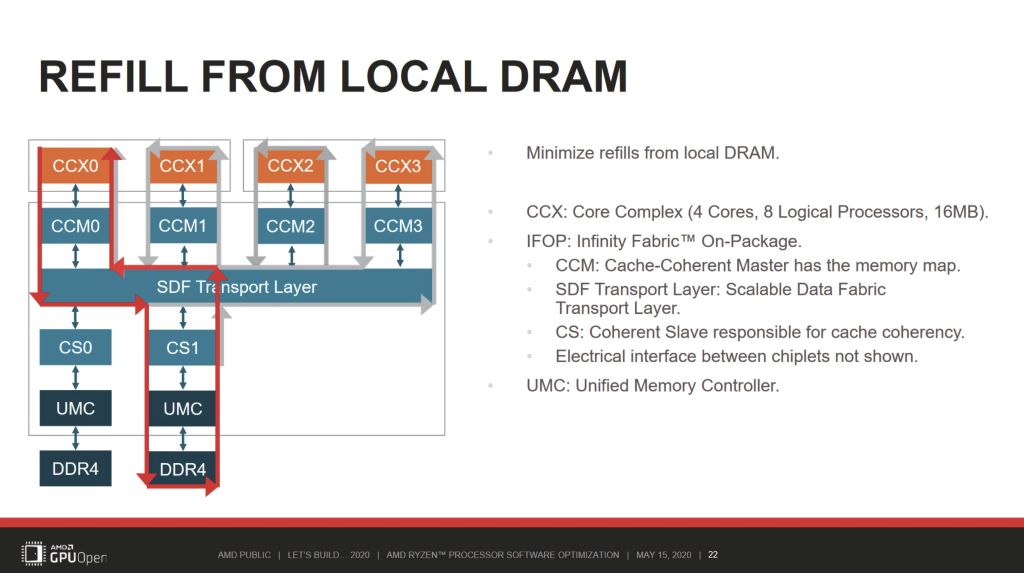
Memory Speed and FCLK Relationships
The relationship between memory speed and FCLK significantly impacts system performance. AMD processors perform best when these frequencies maintain specific ratios. Breaking these relationships can introduce latency penalties that offset potential performance gains.
DDR4 memory operates at double data rate, meaning DDR4-3200 actually runs at 1600MHz base frequency. FCLK should ideally match this base frequency for optimal performance. This creates the coveted 1:1:1 ratio between memory controller, Infinity Fabric, and memory speeds.
Higher memory speeds may require different FCLK configurations. DDR4-3600 memory pairs well with 1800MHz FCLK on capable processors. However, pushing beyond these speeds may force FCLK into 2:1 mode, where it runs at half the memory’s base frequency.
Troubleshooting Common FCLK Issues
FCLK-related problems often manifest as system instability, boot failures, or performance regression. If your system becomes unstable after changing FCLK settings, start by reverting to default configurations. This establishes a stable baseline from which to troubleshoot.
Boot failures typically indicate FCLK frequencies beyond your processor’s capabilities. Most Gigabyte motherboards include BIOS recovery features that restore default settings automatically. If your system won’t boot, try clearing CMOS using the motherboard’s clear button or jumper.
Performance regression might occur when FCLK settings break optimal ratios with memory speeds. Monitor memory latency and bandwidth using benchmarking tools. Compare results before and after making changes to identify problematic configurations.
Advanced FCLK Tuning Techniques
Experienced users can employ advanced techniques to extract maximum performance from their FCLK configurations. These methods require careful testing and monitoring but can yield significant performance improvements. Always maintain stable baseline settings before attempting advanced tuning.
Voltage adjustments sometimes help achieve higher stable FCLK frequencies. Look for SoC voltage or Infinity Fabric voltage settings in your Gigabyte BIOS. Small voltage increases may stabilize higher FCLK speeds, but excessive voltage can damage your processor.
Temperature monitoring becomes crucial during advanced FCLK tuning. Higher frequencies and voltages increase heat generation, potentially affecting system stability. Ensure adequate cooling before attempting aggressive FCLK overclocking. Monitor temperatures during stress testing to avoid thermal throttling.
FCLK Impact on Gaming Performance
Gaming performance often benefits from optimized FCLK configurations. Lower memory latency and improved bandwidth can increase frame rates and reduce stuttering. However, the magnitude of improvement varies between different games and system configurations.
Competitive gaming particularly benefits from reduced memory latency. Lower latency translates to more responsive controls and smoother gameplay. Fighting games, first-person shooters, and real-time strategy games often show measurable improvements from optimized FCLK settings.
Some games rely heavily on memory bandwidth, making FCLK optimization even more critical. Open-world games with large texture streaming requirements benefit from improved memory subsystem performance. Racing simulators and flight simulators also typically respond well to memory optimizations.
Productivity Applications and FCLK
Content creation applications often show significant performance improvements from optimized FCLK configurations. Video editing, 3D rendering, and CAD software frequently access large amounts of data, making memory performance crucial. Proper FCLK tuning can reduce render times and improve workflow efficiency.
Programming and compilation tasks benefit from improved memory performance. Large codebases require frequent memory access during compilation. Optimized FCLK settings can reduce build times and improve development productivity. Database applications also respond positively to memory optimizations.
Scientific computing applications often show dramatic improvements from memory tuning. Simulations, data analysis, and machine learning workloads frequently become memory-bound. Optimal FCLK configurations can significantly accelerate these computational tasks.
Future Considerations and Updates
AMD continues developing their Infinity Fabric architecture with each processor generation. Future processors may support higher FCLK frequencies or introduce new optimization techniques. Staying informed about architectural improvements helps maintain optimal system performance.
BIOS updates from Gigabyte often include improved memory and FCLK support. Regular BIOS updates can unlock better performance from existing hardware. However, always research BIOS updates thoroughly before installation to avoid potential compatibility issues.
Memory technology evolution also affects FCLK optimization strategies. DDR5 memory introduces new performance characteristics that may require different tuning approaches. Understanding these changes helps maintain optimal performance as hardware evolves.
Conclusion
Optimizing FCLK settings in Gigabyte BIOS represents a crucial step toward maximizing AMD system performance. Understanding the relationships between memory speeds, FCLK frequencies, and system stability enables users to unlock their hardware’s full potential. Start with conservative 1:1 ratios between memory and FCLK frequencies, then gradually explore higher settings while maintaining system stability.
Remember that every processor sample behaves differently, and what works for one system may not work for another. Patient testing and gradual adjustments yield the best results. Monitor temperatures, test stability thoroughly, and maintain known-good configurations as backup options.
The effort invested in proper FCLK tuning pays dividends in improved gaming performance, faster content creation workflows, and enhanced productivity application responsiveness. These optimizations transform capable hardware into truly high-performance systems that excel across diverse workloads.
Frequently Asked Questions
What happens if I set FCLK too high in Gigabyte BIOS? Setting FCLK beyond your processor’s capabilities typically results in boot failures or system instability. Most Gigabyte motherboards automatically revert to safe settings if the system fails to boot. If problems persist, clear CMOS to restore default configurations.
Should FCLK always match my memory speed? FCLK should ideally run at half your memory’s effective speed to maintain optimal 1:1 ratios. For DDR4-3200, set FCLK to 1600MHz. This relationship provides the best performance and lowest latency for most applications.
Can higher FCLK damage my AMD processor? FCLK frequencies within reasonable limits won’t damage modern AMD processors. However, excessive voltages applied to achieve unstable FCLK speeds can potentially cause hardware damage. Stay within manufacturer specifications and avoid excessive voltage increases.
Why does my system perform worse after increasing FCLK? Performance regression often occurs when FCLK settings break optimal ratios with memory speeds. This forces the memory controller into less efficient operating modes. Verify that your FCLK maintains proper relationships with your memory configuration.
How do I know if my FCLK settings are stable? Stable FCLK configurations should pass extended stress testing without errors or crashes. Use memory testing tools like MemTest86 and CPU stress tests like Prime95. Monitor system behavior during normal use to identify stability issues that testing might miss.
Read More:
