
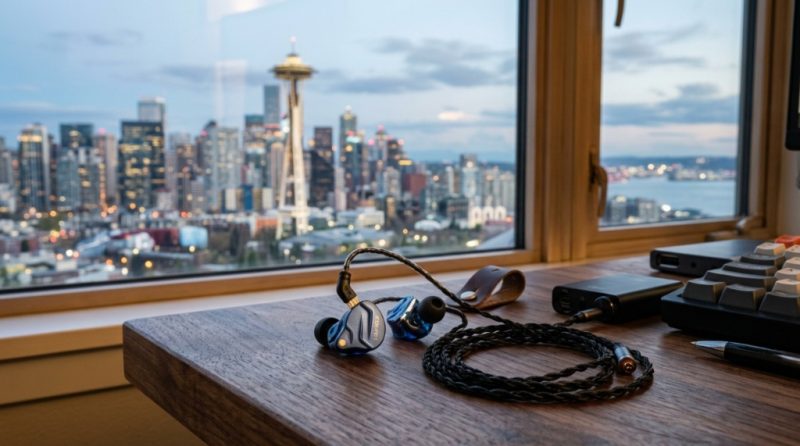
Finding quality sound without breaking the bank is a challenge, especially when you need one device to handle both music and competitive gaming. If you live in Washington, the search can feel even more overwhelming with countless options online and scattered local retailers. The truth is, a great pair of budget IEMs can deliver the clarity and comfort you need for both immersive music sessions and in-game footstep detection, often outperforming bulky gaming headsets at the same price. This guide will walk you through the exact specifications, sound signatures, and practical considerations to make the right choice.
Key Takeaways
- Prioritize IEMs with a neutral-bright sound signature for gaming, as they make in-game cues like footsteps and gunfire clearer without muddying the mix.
- For music, a versatile tuning that balances bass presence with vocal clarity is more enjoyable across different genres than an overly V-shaped sound.
- Comfort and fit are critical for long gaming sessions; consider the nozzle size, eartip material, and overall weight of the IEM before purchasing.
- You do not need a dedicated DAC for most budget IEMs, but a simple USB-C dongle can improve clarity on laptops and phones with weaker headphone jacks.
- The best budget choice is often not the most expensive one; it is the IEM that fits your ears securely and matches your preferred sound signature profile.
Why Budget IEMs Are a Smart Choice for Both Music and Gaming
Traditional gaming headsets often prioritize bass and virtual surround sound, which can come at the cost of clarity and detail. In-ear monitors, on the other hand, are designed initially for professional musicians who need to hear every nuance of a performance. This design philosophy translates directly to gaming. A good budget IEM will offer a more accurate frequency response than many gaming headsets in the same price range, which means better spatial awareness in games and a more authentic reproduction of your favorite albums.
Furthermore, the physical benefits are significant. IEMs are lightweight, do not clamp your head, and do not mess up your hair. They are also more portable, making them perfect for taking to a coffee shop in Seattle or on a trip to the Cascades. When you are searching for budget IEMs for gaming WA, you are looking for a tool that performs double duty without requiring a separate headset for each activity.
Understanding the Sound Signature You Need
Before looking at specific models, you must understand what “tuning” means. The sound signature dictates how the IEM emphasizes different frequencies. This is the most critical factor in your decision because it determines whether the IEM is good for gaming, music, or both.
V-Shaped vs. Neutral Tuning
There are two main camps in the budget IEM world: V-shaped and Neutral. V-shaped tuning boosts the bass and treble, which makes music sound exciting and punchy, but it can sometimes mask quiet details in games. Neutral tuning aims for a flat frequency response, giving you a more accurate representation of the recording. For gaming, a slight tilt towards the upper-midrange and treble is ideal because that is where footsteps and environmental cues live.
For a dual-purpose IEM, a “U-shaped” or “Harmanish” tuning is often the sweet spot. This provides a moderate bass boost for musical enjoyment while keeping the mids and highs clear enough for competitive gaming. IEMs with this tuning will make an acoustic guitar sound natural in a song, yet also make a reloading sound in a shooter game precise and easy to locate.
Key Specifications to Look For
Specs are not everything, but they give you a baseline for performance. You do not need to be an audiophile to understand the numbers, but knowing what they mean helps you filter out poor options.
The Importance of the Driver Configuration
Most budget IEMs use a single dynamic driver, which is excellent for producing rich bass. However, some models feature hybrid configurations, combining a dynamic driver for bass with a balanced armature (BA) driver for treble. While hybrids can offer incredible detail, they sometimes suffer from a “coherency” issue where the drivers do not blend perfectly. For gaming, a well-tuned single dynamic driver is often the safest and most reliable choice, as it delivers a cohesive soundstage that is essential for positional audio.
Impedance and Sensitivity
Impedance is often overlooked but is crucial for gaming. You want an IEM with low impedance (under 32 ohms) and high sensitivity. This combination ensures that your phone or laptop motherboard can drive the IEM to a sufficient volume without a dedicated amplifier. High-impedance IEMs will sound quiet and dull without the right gear. Always check these specs to ensure the IEM is “easy to drive.”
Cable Quality and Connectivity
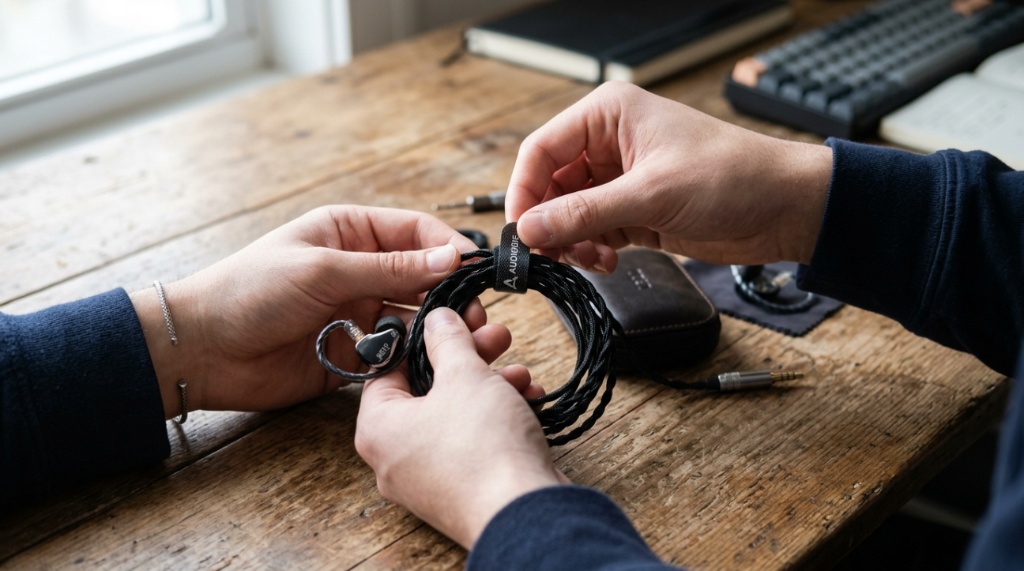
While the cable does not affect sound quality, it affects durability. A cheap, stiff cable can ruin the experience. Look for IEMs with a detachable cable, usually a 2-pin or MMCX connector. Detachable cables allow you to replace a damaged cable instead of buying a whole new IEM. Also, check if the cable has a microphone and remote, as this is essential for in-game chat or taking calls on the go,For details on wireless device connectivity limits and wireless hardware specs, check out our guide where we have call button signal range explained.
Soundstage and Imaging: The Gaming Factor
When buying for gaming, two terms matter more than any spec sheet number: soundstage and imaging.
Soundstage is the perceived space in which the music or game sounds occur. A wide soundstage makes a game world feel expansive. Imaging is the accuracy of the placement of specific sounds within that space. Excellent imaging means you can tell if an enemy is above, below, or to the left of you.
Budget IEMs often struggle with soundstage due to their small size, but some achieve surprisingly good width. Look for IEMs that are known for “airy” treble and a “holographic” presentation. In-game, this translates to feeling like the sound is happening around you rather than inside your head, giving you the tactical advantage you need in competitive shooters like Valorant or Call of Duty.
Practical Considerations for Washington Residents
Living in Washington means dealing with rain and humidity. While this does not directly affect the sound of your IEMs, it does impact durability and comfort.
Dealing with the Climate
The moisture in the Pacific Northwest air can cause condensation inside your ear tips, which can slightly muffle the sound. It is wise to consider the eartip material. Silicone tips are durable and water-resistant, while foam tips provide a better seal and are more comfortable for long wear, but they may absorb moisture and wear out faster. For gaming sessions that last several hours, a set of high-quality foam tips can massively improve comfort, but keep a spare set in your bag for the rainy commute.
Where to Buy Locally vs. Online
While local electronics stores may have a limited selection, often focused on big-brand consumer IEMs, online retailers offer the full spectrum of budget audiophile gear. However, the advantage of buying locally is being able to test the fit. If you are in the Seattle area, trying an IEM at a physical store can tell you immediately if the nozzle is too large for your ear canal. Online, you can read reviews that describe the fit, but there is always a risk. Look for retailers with good return policies to mitigate this.
Comparison: Budget IEMs vs. Gaming Headsets
To understand why IEMs are a better value, it helps to see the differences laid out clearly.
| Feature | Budget IEMs | Budget Gaming Headsets |
|---|---|---|
| Sound Quality | Higher fidelity and detail generally | Often bass-heavy and muddy |
| Comfort for Long Sessions | Lightweight, no ear cup heat | Can cause head clamping and sweaty ears |
| Soundstage | Good to excellent (though often “in-head”) | Often artificially wide via software |
| Microphone | Requires cable with mic (quality varies) | Usually built-in, but often mediocre boom quality |
| Portability | Fits in a pocket | Bulky and bulky to carry |
| Price | Excellent value for performance | Often overpriced for the parts used |
This table shows that for the same $50, you generally get better drivers and more accurate tuning in an IEM than in a gaming headset. The main trade-off is that you need to buy a microphone separately if the stock cable does not have one, which adds a few dollars to the budget.
Common Mistakes to Avoid When Buying Budget IEMs
It is easy to make a purchase you regret if you do not know what to look for. Here are the most frequent pitfalls buyers in Washington make.
- Ignoring the fit: Buying an IEM that is physically too large for your ear canals. This leads to pain and poor sound isolation. Always check the nozzle diameter.
- Chasing bass: Buying IEMs with excessive bass because they look fun on a graph. This ruins gaming performance by masking high-frequency cues.
- Neglecting the mic: Assuming all IEMs have a microphone. Many audiophile IEMs come with a cable that has no mic, meaning you cannot use them for multiplayer gaming without a separate setup.
- Forgetting about the dongle: Assuming your phone’s USB-C port will work without an adapter. Some phones require a specific DAC dongle to output sound via USB-C.
- Overlooking detachable cables: Buying a cheap IEM with a fixed cable. When the cable breaks (and it will), the entire IEM becomes useless.
Setting Up Your IEMs for the Best Experience
Once you buy your IEMs, the setup is essential to maximize performance.
- Eartip Selection: Try all the included eartips. You need a snug fit to create a proper seal. Without a seal, you will have no bass and poor isolation. If none fit perfectly, consider buying aftermarket tips like SpinFit or Comply foam.
- DAC Dongle: If your computer has a noisy audio jack (you hear hissing), buy a cheap USB-C dongle DAC. This bypasses the motherboard’s internal sound card for a cleaner signal. You do not need to spend more than $20 to get a clean output.
- Software: If your PC uses Realtek audio, disable all “sound effects” or “enhancements” in the sound control panel. This “Direct Mode” or “Studio” mode can mess with the IEMs’ frequency response. Set your audio to 24-bit/48000Hz for the best balance.
- Over-Ear Fit: Loop the cable over your ears. This reduces cable noise (microphonics) and keeps the IEMs secure when you turn your head quickly in a game.
Frequently Asked Questions
Are IEMs good for competitive gaming?
Yes, IEMs are excellent for competitive gaming. They typically offer better imaging and clarity than gaming headsets in the same price range, allowing you to pinpoint directional audio cues like footsteps and gunfire more accurately.
Can I use IEMs on my gaming console?
Yes, modern consoles like the Xbox Series X/S and PlayStation 5 support USB-C audio via a dongle or have a 3.5mm headphone jack on the controller. You can plug your IEMs directly into the controller, but a DAC dongle may be needed for optimal volume and clarity on Xbox consoles specifically.
Do I need a special amplifier for budget IEMs?
Generally, no. Most budget IEMs are designed to be high-sensitivity and low-impedance, meaning they work perfectly fine with the headphone jack on your phone, laptop, or console controller. You only need an amplifier if your IEM is particularly hard to drive or if you notice a constant hissing sound from your PC.
Why do my IEMs sound tinny?
Tinny sound is almost always caused by a poor fit. If the eartip is not creating a seal in your ear canal, you lose all the bass response and the IEM will sound thin and harsh. Try a different eartip size or material until you achieve a tight seal.
Are expensive cables worth it for IEMs?
No. Expensive cables do not improve sound quality; they only improve durability and aesthetics. For budget IEMs, a standard replacement cable that is well-built and has the right connector is all you need. Invest your money in a better pair of eartips instead.
Conclusion
Selecting the right budget IEMs for both music and gaming in Washington is about balancing specifications with practical comfort. Focus on a neutral or U-shaped sound signature to keep vocals clear in music and footsteps audible in games. Prioritize build quality with detachable cables and ensure the impedance is low enough to work with your existing devices. Remember that a proper fit is non-negotiable; a good seal is the foundation of good sound. By avoiding the common mistakes of chasing bass or ignoring the microphone, you can find an IEM that not only outperforms gaming headsets but also becomes your go-to travel companion for daily commutes. Take your time, check the fit, and you will get a solid audio partner for years to come.
